The Silence Does Not Have to Mean Something Hidden
Silence in film can slow a scene, focus attention, or build atmosphere without hiding a clue; learn to read the choices that give quiet its shape.
When a film goes quiet, should you start hunting for a secret? Not necessarily. Silence in film can set a pace, direct attention, or make a place feel newly exposed; a hidden clue is only one possibility. The difference often becomes clearer when you follow what the image and sound do around the quiet.
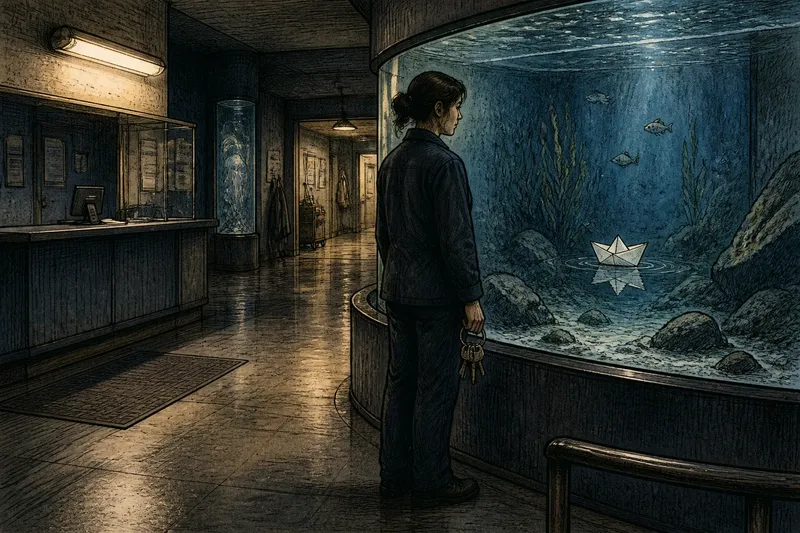
Imagine a hypothetical scene in which Mara, a night-shift caretaker at a small public aquarium, locks the front doors after closing. She walks past the dark ticket counter and stops beside a tank where a paper boat is circling near the glass. The usual pump hum falls away. Mara does not react with alarm; she watches the boat drift, then continues toward the staff corridor.
That brief quiet could invite a mystery reading: perhaps the boat is a message, or the pump stopped for a reason. But the scene need not promise either. Its silence might simply give the audience a moment to notice the boat, settle into Mara’s unhurried routine, or feel the aquarium as a vast, nearly empty space. The useful question is not just “What does the silence mean?” It is “What does this quiet make me notice, and what does the scene ask me to expect next?”
Three Kinds of Quiet
For this walk-through, the sound team and filmmaker can treat silence as an absence of prominent sound rather than literal, total silence. A theater playback system, a television speaker, and a viewer’s room all have their own low-level noise. On screen, quiet usually means that the mix has reduced or removed particular sounds so other elements come forward.
In the aquarium scene, the pump hum might stop while the faint rattle of the boat against the glass remains. That decision changes what reaches the audience, but it does not settle why the hum stopped. To read the moment, separate three possible jobs the quiet can perform:
- Pace: It gives an action room to unfold instead of pushing the viewer toward the next beat.
- Attention: It makes a visual detail or small sound easier to register.
- Atmosphere: It changes the felt character of a location, perhaps making it seem spacious, intimate, tense, or still.
These jobs can overlap. The boat becomes easier to notice, and the pause also gives the closing routine a slower rhythm. Neither effect requires the boat to carry a secret. A scene can be purposeful without setting up a puzzle.
The Aquarium Walk-Through
Consider how the scene might develop. The opening image shows Mara’s hand turning the lock. A fluorescent fixture buzzes softly above the empty ticket counter, and water moves behind glass. These sounds establish a working building after visitors have left. Mara crosses the lobby at an even pace, holding a ring of keys that knocks against her coat when she walks.
At the tank, the buzz and key noise drop out. The pump hum remains for a moment, then recedes too. The camera stays at a medium distance rather than cutting immediately to Mara’s face. The paper boat makes a slow circuit. A tiny tap sounds when it touches the glass.
There is now a clear shift in attention. The audience can see what Mara is watching and hear the boat’s tap against a background that has become spare. But the scene has not shown the boat arriving, attached a note to it, or given Mara a startled reaction. Those omissions do not prove the boat is irrelevant; they simply leave its status open. The quiet is not, by itself, evidence of a concealed plot.
Mara waits for the boat to drift past the same point once more. Then she turns toward the staff corridor. The camera holds on the tank for a beat after she leaves, before the pump hum returns under the next shot. That final pause lets the location retain a little presence beyond Mara’s immediate attention. It may make the aquarium feel calm, oddly lonely, or both. The result depends on the surrounding images and on the viewer, not on a hidden explanation that the silence must supply.
Now imagine a different version. The boat bumps the glass, and Mara immediately glances toward a locked maintenance door. The quiet continues as she approaches it; a new, faint scrape comes from the other side. The sound and her response now invite a question about the door. Even here, the silence itself is not the clue. The changed look, the new sound, and the sequence of actions give the moment its suspenseful direction.
For a screenwriter or editor, that distinction matters. If the scene needs the audience to suspect the boat, it can create a visible or audible connection: Mara recognizes a mark on it, the boat appears where it could not have drifted naturally, or a later action confirms that someone placed it there. If the aim is a reflective pause, those signals may be unnecessary. The moment can remain open without pretending to be a riddle.
Reading the Sound Choices
Quiet is shaped by what remains, what disappears, and when each change occurs. A scene might remove music but preserve room tone, the soft acoustic character of the space. It might cut a mechanical hum while leaving a small object’s scrape audible. Or it might hold a sustained, near-silent bed with only the actors’ breathing. Each choice points attention differently.
In the aquarium, bringing back the pump hum when Mara reaches the corridor can mark a transition back into routine. Keeping it absent could instead let the stillness follow her, making the pause feel less tied to the tank. Neither choice automatically reveals a threat. The return or continued absence is a pattern whose effect emerges in context.
Visual choices help establish that context. A close-up of the boat, paired with a precise sound, may emphasize its material detail. A wider frame can make it a small element within a large, empty room. A steady shot can allow time to pass without announcing a dramatic turn; an abrupt cut may make the same quiet feel unsettled. Sound does not work alone, and a silent beat cannot be interpreted reliably without noticing the image and the surrounding edits.
Try asking a few practical questions while watching:
- What sound was present just before the quiet, and what has replaced it?
- Does the camera direct attention toward a person, an object, or the space between them?
- Does a character react as if something has changed?
- Does the scene later return to the sound, image, or action that stood out?
These questions help distinguish an invitation to pay attention from a promise that a mystery will be solved. A detail can matter as texture, rhythm, or mood even if it never becomes a plot point.
Questions About Silence?
Does silence always signal suspense?
No. A quiet passage can slow the scene, make a small action legible, or let the setting feel still. Suspense becomes likelier when the surrounding choices also create expectation, such as a character’s wary reaction or a sound that appears to come from somewhere unseen.
Can a quiet moment be meaningful without a clue?
Yes. Meaning can come from timing, mood, and the viewer’s attention rather than from information that will later be explained. The aquarium’s pause can show how Mara moves through a familiar space without announcing that the boat has a secret purpose.
What is the difference between silence and low sound?
In a finished scene, “silence” often means that some sounds have been removed or lowered while others remain. Room tone, breath, distant traffic, or a soft mechanical noise may still be present, and those details can give the quiet its texture.
How can a filmmaker keep a pause from feeling confusing?
Give the audience a readable point of attention, such as a held image, a clear reaction, or a sound change that fits the scene. If a specific clue matters, connect it to later action rather than relying on quiet alone to signal its importance.
From Pause to Result
Return to Mara’s scene. Its starting point is an ordinary closing routine: keys, a locked door, and the subdued noise of a building settling after visitors leave. The action is a pause at the tank, with the familiar hum receding and a small tap remaining. The observable result is that the viewer has time to register the boat, feel the room’s stillness, and watch Mara resume her route. The scene may leave a trace of curiosity, but it does not force a hidden explanation.
That is a complete dramatic result, even without a reveal. The quiet has changed the pace and focus of the sequence; the image has gained a little room. If a later scene uses the boat as a clue, that new information can revise the first moment. Until then, it is fair to let the boat be a boat and the silence be a pause.
When silence in film catches your attention, look for the specific choice that shaped it: the sound removed, the image held, or the reaction withheld. That small distinction keeps suspense available without turning every quiet moment into a coded message.