Dialogue or Action Lines: Two Ways a Screenplay Carries Meaning
Dialogue or action lines: learn what speech and visible behavior can each convey, and how their contrast gives a screenplay scene richer meaning.

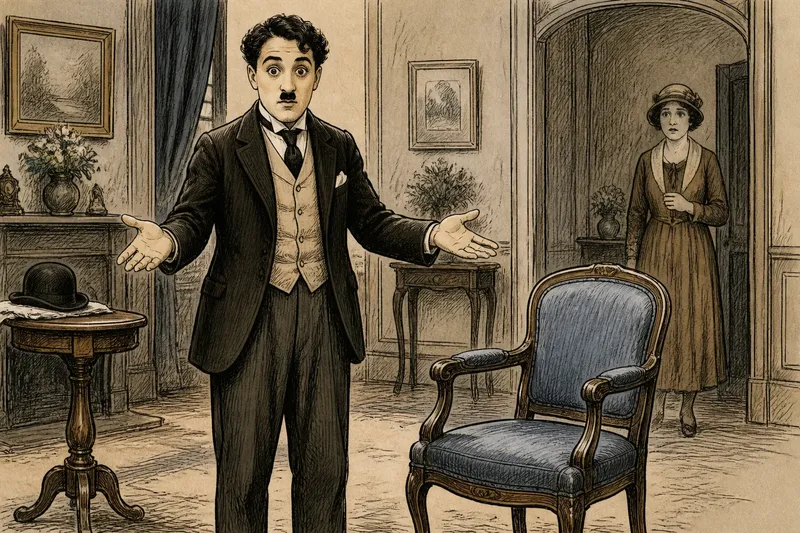
What should a screenplay let a character say, and what should it leave for the audience to see? Dialogue or action lines can carry the same scene in sharply different ways: speech gives us a character’s chosen words, while action gives us observable behavior. A scene often gains force when those channels do not simply repeat each other.
Two kinds of evidence
Dialogue is the language a character speaks aloud. Action lines describe what can be seen or heard on screen: a hand hovering over a doorknob, a chair scraping back, rain tapping a window. In a screenplay, both are instructions for an eventual performance and presentation, but they offer different evidence about what is happening.
A line of dialogue can name a fact, make a request, dodge a question, or attempt to change someone’s mind. Action can show a body responding, an object changing hands, or a physical obstacle interrupting a plan. The screenplay does not have to explain every response in prose. Often, the audience can infer a feeling from what a character does and the moment they choose to do it.
That distinction is not a strict division between truth and deception. A character may speak sincerely, while an action may be accidental or ambiguous. The writer chooses which evidence to place before the audience, and how much room to leave for interpretation.
What speech can do
Dialogue gives a scene access to a character’s deliberate use of language. A person can make a promise, change the subject, offer a reason, or use a familiar phrase to sound composed. Speech also carries rhythm: interruptions, pauses, blunt replies, and overlong explanations can make an exchange feel guarded, playful, tense, or uneven.
Words can also deliver information that would be cumbersome to show. A character might mention that a train has been canceled, identify a stranger, or explain why a document matters. The useful question is not whether exposition belongs in dialogue, but whether this character has a reason to say it here and whether the other person needs to hear it.
Dialogue has limits. “I’m not worried” tells us what the speaker claims, not what the claim means. If the scene also needs to show strain, a writer can give that evidence to the performance and surroundings rather than adding a sentence that translates the line.
What action can do
Action lines make behavior and circumstance legible. A character can straighten a crooked frame while insisting that nothing is wrong; the correction is visible, while the reason for it remains open. An action can also alter the practical shape of a scene: someone blocks an exit, slides a key across a table, or switches off a lamp.
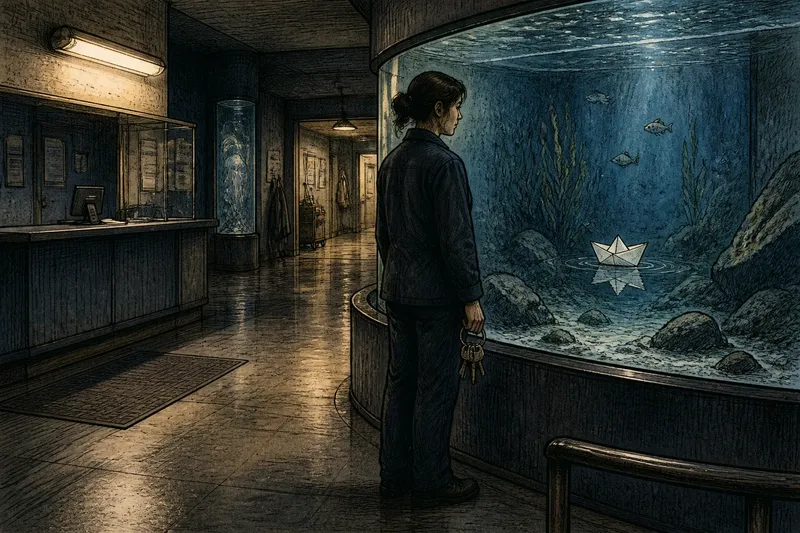
These details matter because screen stories are made of images and sounds, not just spoken sentences. An action line can point toward a meaningful prop, a change in distance, or a sound that interrupts a conversation. It should describe something the audience could perceive, rather than an unfilmable conclusion such as “she realizes he has betrayed her.” The realization may be important, but the script needs to express it through a playable response or a spoken thought.
Keep action descriptions selective. A screenplay does not need to inventory every movement in the room. Choose the behavior that changes what a viewer understands, notices, or expects.
Let the channels differ
If dialogue and action both deliver the same information in the same way, the scene can feel overexplained. A character says, “I’m leaving,” then immediately walks out; sometimes that is clear and useful, but the movement may add little. If the character says the words and stays seated, the gap can raise a more interesting question: are they unable to leave, waiting for a reply, or trying to sound decisive?
Contrast does not have to mean a hidden motive. It can come from a simple mismatch between words and conduct. A cheerful greeting over a hurried search suggests distraction; a courteous offer made while someone keeps a hand on the only key creates tension through competing signals. The audience attends to both and works out how they fit together.
Say you are writing a scene in which Mara returns a borrowed sketchbook to Eli after a disagreement. She says, “I kept it safe,” while action shows her smoothing a bent corner before handing it over. The line offers reassurance; the gesture reveals care and perhaps guilt, without specifying which. The expected observable result is that viewers can register both the reassurance and the damage, then decide how to read their difference.
Choosing the right channel
A useful revision starts by naming what each beat needs to communicate. Is the audience meant to learn a fact, hear a character’s tactic, notice a physical change, or compare a claim with behavior? Once that job is clear, assign it to dialogue, action, or a deliberate combination.
- Use dialogue for a request, explanation, promise, accusation, or other act performed through words.
- Use action for visible behavior, changing space, significant objects, and physical interruptions.
- Use both when their difference creates a useful question or reveals competing signals.
- Cut duplication when a line merely narrates an action the audience can already see, unless repetition is itself meaningful.
- Check playability by asking whether an actor and director could express the action without being told an invisible emotion.
Read the scene once for spoken intention and once for visible evidence. If both readings reveal the same thing in the same way, consider moving one piece of meaning to the other channel.
Questions about screenplay meaning?
Can action lines describe emotion?
They can describe behavior that suggests emotion, such as a character setting down a cup with care or shoving it aside. Avoid presenting an inner state as though it were directly visible; give the performer an action the audience can observe.
Should dialogue and action contradict?
They may diverge, but the mismatch should serve the scene rather than function as a puzzle for its own sake. A small, readable difference can convey hesitation, politeness, distraction, or uncertainty without forcing one fixed interpretation.
How much detail belongs in an action line?
Include enough for the reader to picture the behavior and understand why it matters, then leave room for performance and staging. If a detail changes no one’s understanding or expectation, it may not need to be there.
Can a screenplay use silence instead of dialogue?
Yes, if the scene still gives the audience something to read through behavior, sound, or changing circumstances. Silence is not automatically meaningful; its effect depends on what the characters do and what the scene has made noticeable.
Meaning between channels
Dialogue or action lines need not compete for control of a scene. Each can carry a different piece of evidence: words establish a claim, while visible behavior complicates it; a gesture creates a question, while dialogue gives the audience a reason to care. When revising, look for the point where speech and action meet, then decide whether they should agree, differ, or leave a small, productive gap.
The main search phrase, dialogue or action lines, is useful because it names a craft choice rather than a rule. The most revealing choice is often not which channel speaks louder, but which one lets the viewer do a little of the storytelling.